We know that drug-induced abortions are on the rise. According to the latest available data, they account for 63% of reported abortions nationwide, and the current number is likely significantly higher. While we know abortion pills are harmful for preborn children and women who take them, one question is getting asked more often: Are there larger public health concerns related to the increasing and unregulated use of mifepristone?
In recent years, some pro-life organizations have raised concerns about the potential environmental impact of abortion drugs entering America’s water systems. While this may sound insignificant at first glance, mifepristone is an endocrine disrupting compound (EDC) that acts as a progesterone blocker with direct reproductive effects when ingested. AAPLOG recently raised concerns about the lack of environmental testing for mifepristone, given its ubiquitous use. In a comment submitted to the Environmental Protection Agency (EPA), AAPLOG noted:
“Despite the staggering growth in usage of the abortion drug mifepristone in the United States over the past two decades, no comprehensive Safe Drinking Water Act assessment, Clean Water Act assessment, or National Environmental Policy Act review has been conducted. This is especially concerning in connection with the major actions taken over the past decade to remove safety requirements under the Risk Evaluation and Mitigation Strategies (REMS), particularly the removal of the requirement for in-person dispensing of mifepristone.”
Now, new research is adding to the need for further analysis.
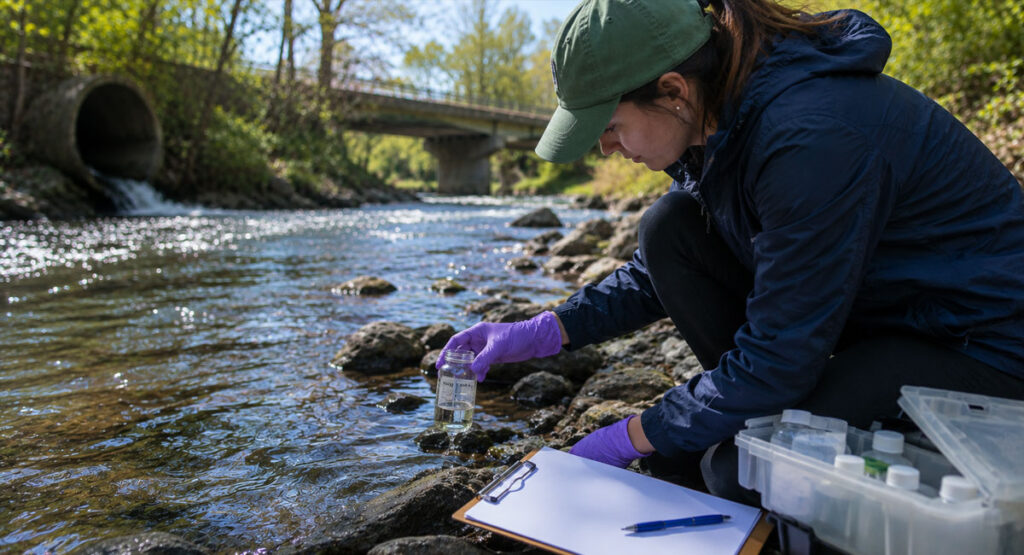
A recently published peer-reviewed study examined the presence of mifepristone in environmental water sources in three US cities. The study, “Anti-Progesterone in Environmental Water,” which compared water samples upstream and downstream of water treatment facilities as well as in tap water to controls, found mifepristone concentrations of up to 41 parts per trillion in tested water samples.
According to the researchers, these levels could have implications for both aquatic wildlife and human health, including fertility, pregnancy, and fetal development. The study states:
“There were significant levels of mifepristone (up to 0.041 μgram/l) in the water of all but one of the nine sampling classes. Because of the plethora of effects of progesterone, this contaminant could affect the physiology of aquatic animals and human health, including fertility, pregnancy and fetal development. The findings indicate the necessity for significant additional investigation into the levels of various hormones and EDCs, including mifepristone, in water sources.”
While this study was small and does not speak to the actual wildlife and clinical impact that these levels of mifepristone in our water has, it certainly indicates the need for larger and broader study. It also serves as a unique reminder that the effects of abortion are not always limited to the preborn child, mother, and father. Abortion affects society in foundationally philosophical ways, but it may also have broader environmental and public health consequences that deserve further investigation. As the prevalence of abortion drugs continues to increase, understanding their impact on ecosystems, wildlife, and human reproductive health should be a matter of public concern.